




 This page is not a real translation but just an automatic translation generated by computer of the original article, written in French language! Its not good... but better than nothing!
Want to help us do diffuse puerh tea culture in english, by providing a better (or corrected) translation?
Please contact us!

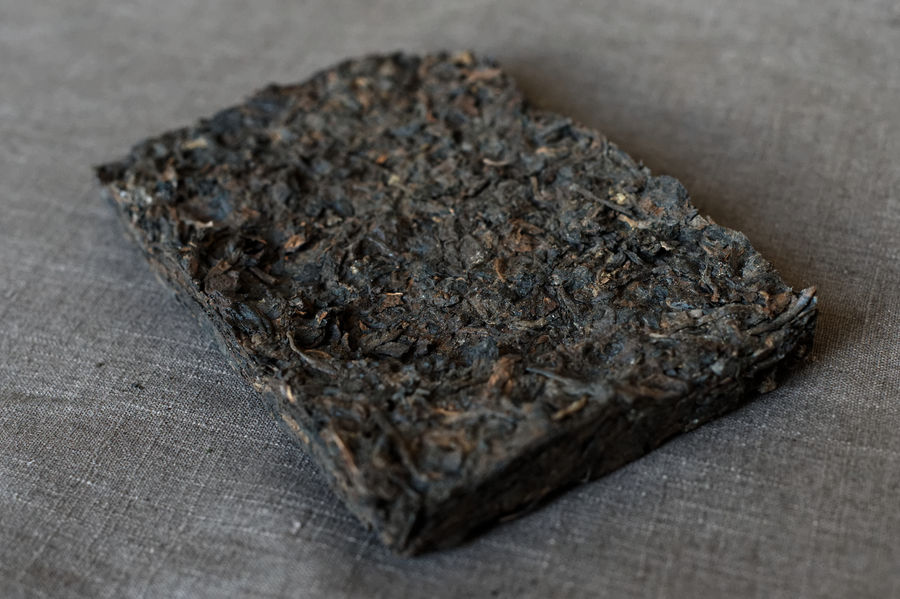
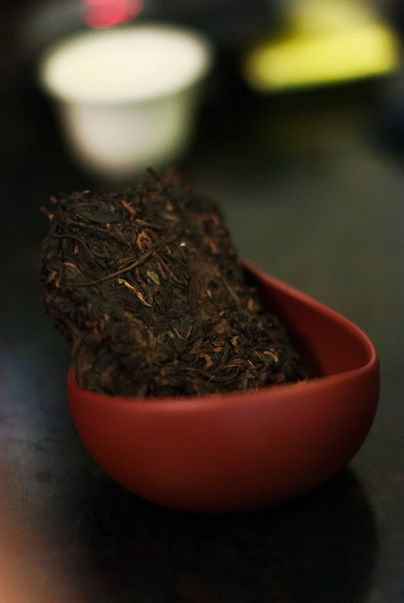
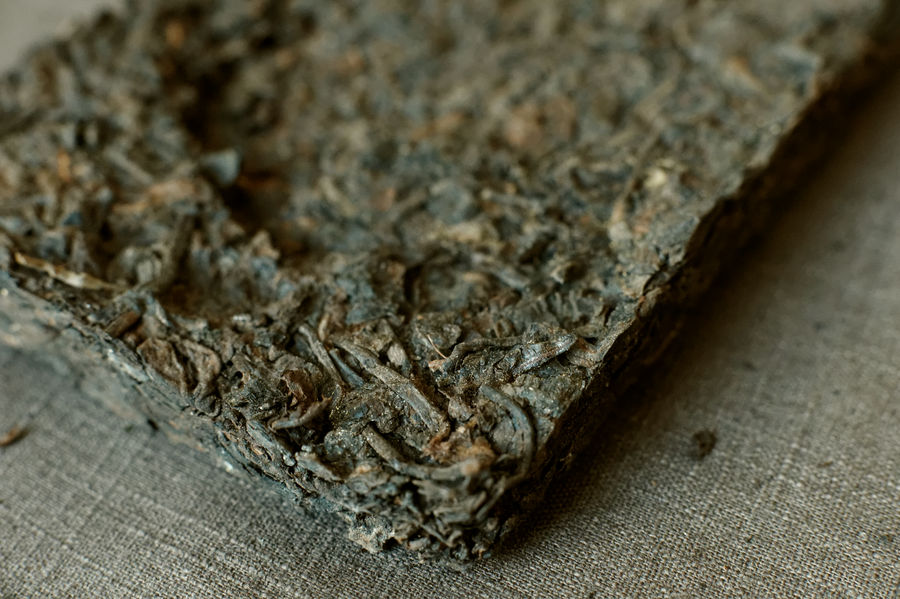
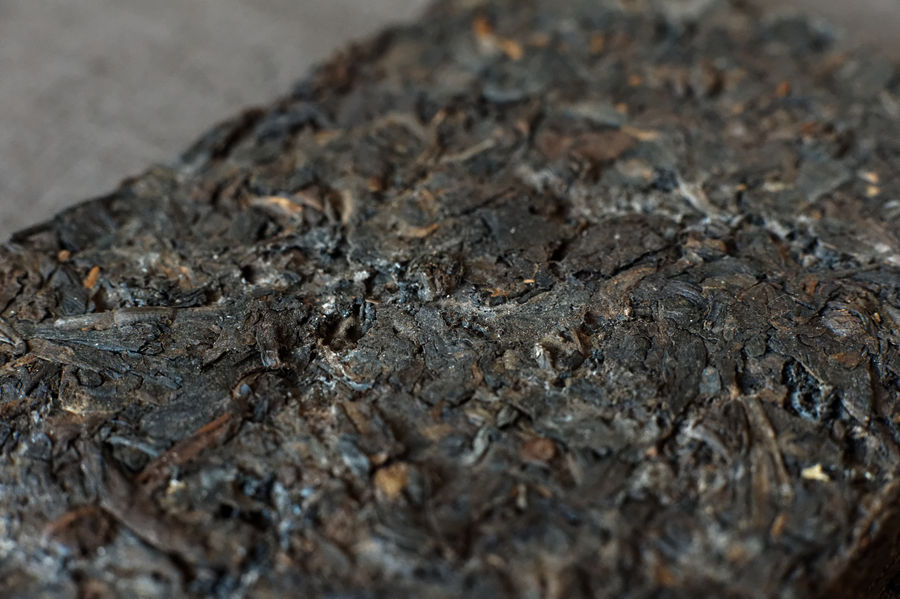
This brick puerh (Pu Er tea) tea produced in the 70s , seems at first not very talkative. Like many old puerh (Pu Er tea) has traveled through time and Asia without his papers, and came to us naked:compact plant curves brown ocher block. Its origin? The name of the workshop was compressed ? The exact date of its production? We do not know .
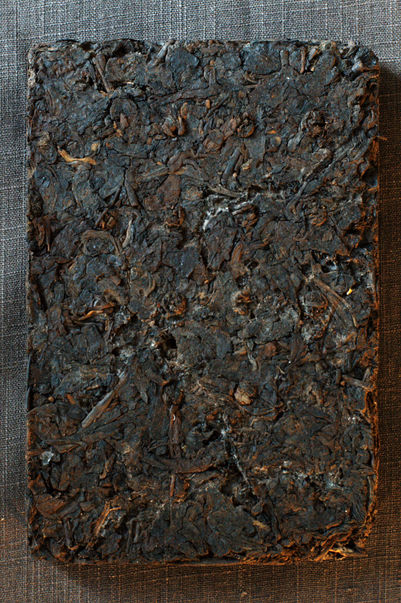
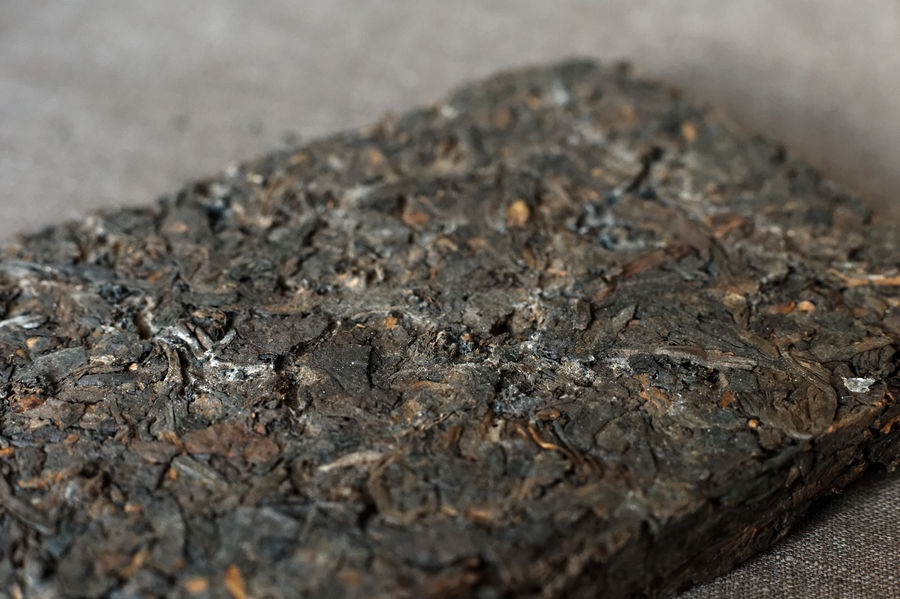
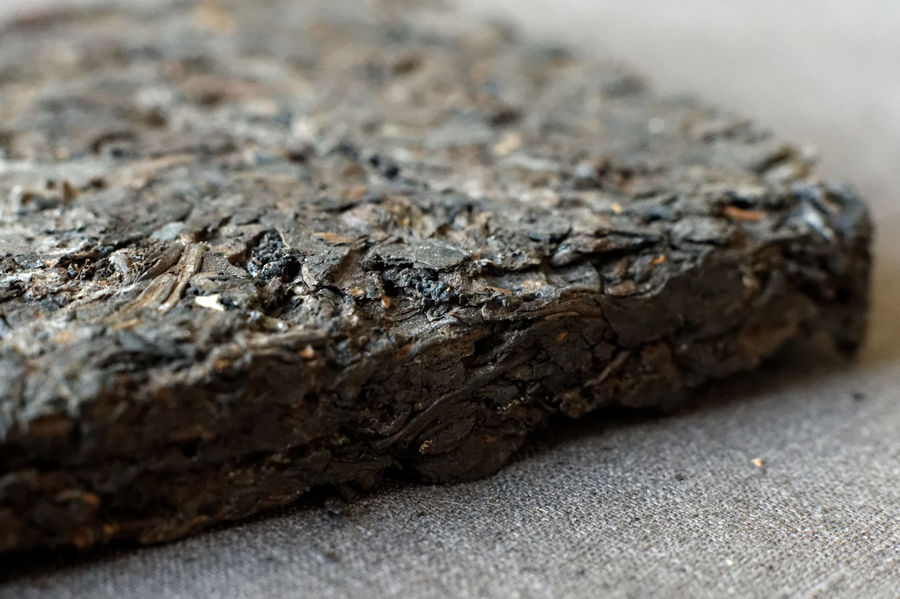
- 1.fermented Brick 90s
- 2.Fermented Brick 90s
- 4.fermented Brick 90s
Only accompanies this small block past the memories of those who are rubbed , especially the collector in which it sits since the early 90s. This brick has probably started his story on the branches of a tree tea mountains of Yunnan. Probably because despite what may be said the Chinese teas have similar nature summers products in the border areas of Yunnan , the Chinese territory , but on the other side of the border , including Vietnam and Burma, that it may well be that the history of this tea began.
As was the fate of many old puerh (Pu Er tea) , these few tea leaves then traveled from China to Hong Kong, probably from their production in the 70s. The tea was carefully preserved it for twenty years among many other puerh (Pu Er tea) teas in the stock of a teahouse Hong Kongaise . It is thus possible that in this stock it has rubbed some ancestors of the early century from large workshops in the history of puerh (Pu Er tea) as Song Hao Ping , Tong Ching Chang Tong Hao or Hao.
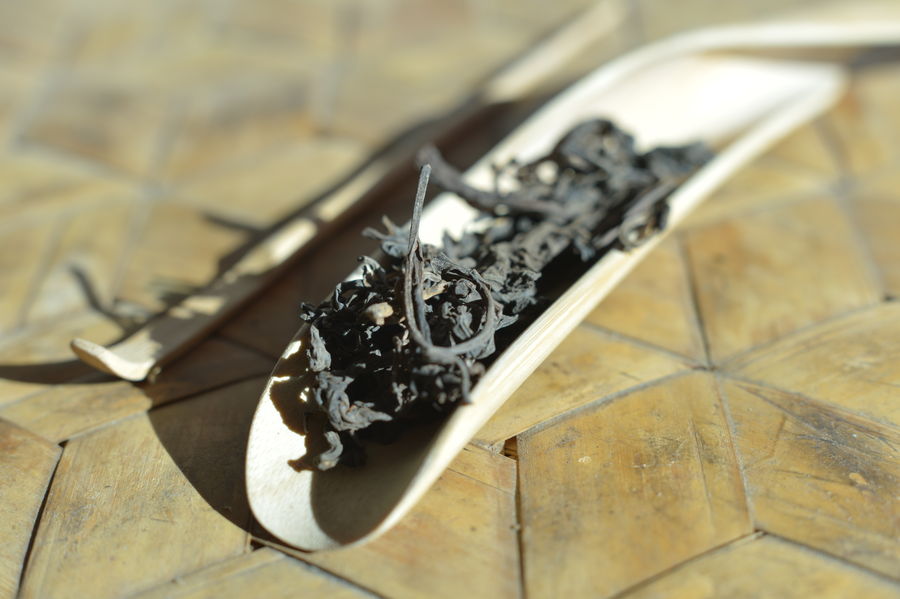
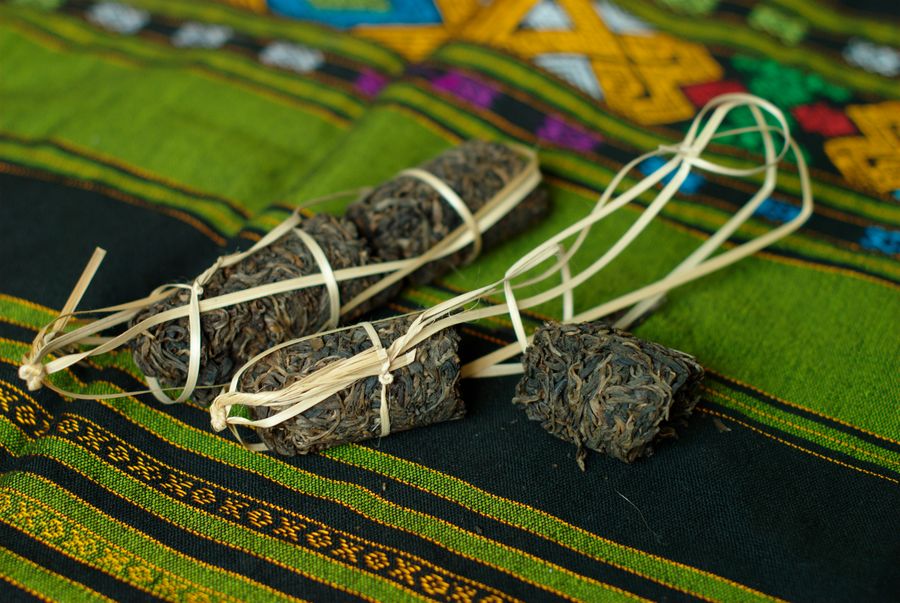
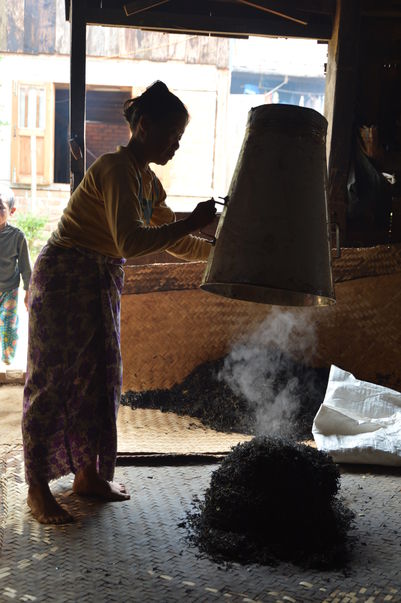
- 1.Old Puerh probably from Vietnam
- 2.Shape puerh (Pu Er tea) tea in Laos
- 3.Shape puerh (Pu Er tea) tea produced in Burma
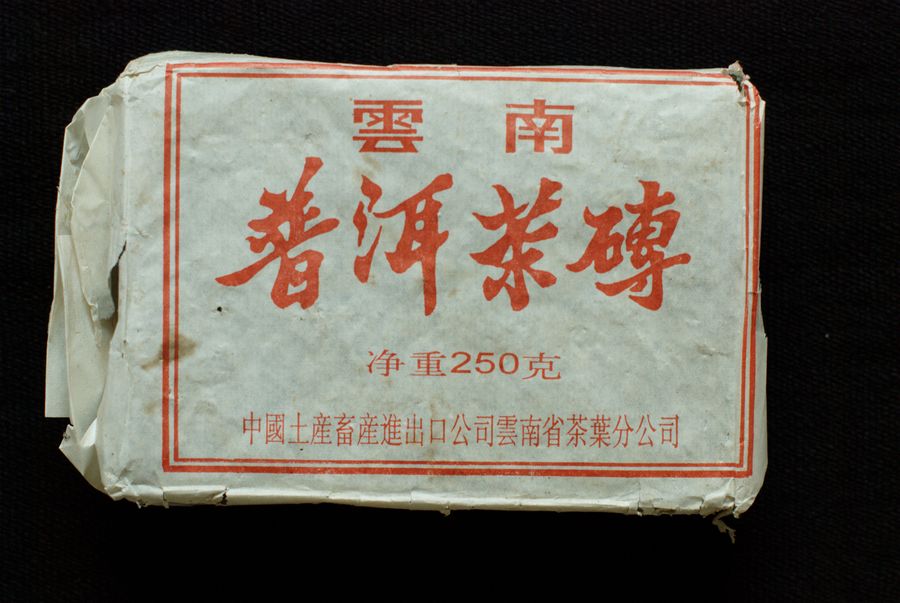
- 4.Packing CNNP a brick 80
In the mid 90s, when Taiwan since the value of these old puerh (Pu Er tea) being rediscovered and the gates of Hong Kong stocks begin to open , a Taiwanese collector redeem the stock of these bricks . Remember him her it was sold as fermented bricks, aged twenty years . We possessed at that time little information about productions of the era of state factories, all dressed in the same colors of the party. Like its sisters then this brick clothed costume CNNP national productions ( China National Native Produce & Animal By- Products Import & Export Corporation ) , although this is no guarantee in any case they were truly from a control condition.
But in the political context 90s embark on Taiwan with such a package in the colors of Mao returned to run great risks and see its arrival on the island compromised . All stock was then stripped to travel in neutral packaging and uncertain origin . And that is how this brick landed in Taiwan where she spent the last 20 years. After moisture teahouses Hong Kongaises , which marked the adolescence of this tea is in a dry storage that will eventually arise , to balance , to settle down and become mature .
It is ultimately in the 2010s that I discovered this old stock, and that I have brought some in Yunnan , offering these bricks return ticket they lacked to find their origins. As said very nice way Deng Shi Hai " puerh (Pu Er tea) are migratory birds, and China via Hong Kong they arrived in Taiwan, then went back to China. Teas are no longer what we left ( Taiwan ) is culture . "
If so we do not know much about the origin of this brick tea , much remains yet listed in the folds of the sheets composed and tastings done instantly COME OUT a key period , but also disorder and controversial of puerh (Pu Er tea) tea history , that of the first appearance of modern fermented puerh (Pu Er tea) .
So start talking before this period not taste the remnants she left behind her, and let the leaves express ...
 Chargement du thé...
What emerges from this tasting and foremost characterizes this tea , in addition to its very respectable age, is the special fermentation that has shaped his character. This one we referrals 40 years ago, there was due wo or , if n is invented , at least theorized , and where the first modern fermented puerh (Pu Er tea) were pressed .
The onset of modern fermented puerh (Pu Er tea)
The man did not wait 70 years to discover and experience the fermentation of puerh (Pu Er tea) tea, which we already find traces in the traditional culture of different ethnic groups in Yunnan such as Blang , and fermentation practices which probably date back long before the Chinese Yunnan becomes earth (see article the origins of the maturation of puerh (Pu Er tea) tea ) . More recently various documents show that the fermentation caused puerh (Pu Er tea) tea was practiced by both farmers by various private workshops as Fu Cha Hai Chang from the 40s, and probably well before that, especially to produce jincha , puerh (Pu Er tea) compresses mushroom for export to Tibet.
However, the 70 marked a turning point in the history of puerh (Pu Er tea) tea with standardization and industrialization of the process said Wo Due at the origin of modern and contemporary fermented puerh (Pu Er tea) , and the arrival on the market first puerh (Pu Er tea) fermented products by the Chinese state factories. Or different influential regions history and puerh (Pu Er tea) tea of the day market today calling for the creation of the modern fermented puerh (Pu Er tea) .
Yunnan empirical fermentation fermented raw bricks produced by CNNP
As I already mentioned , Yunnan already producing fermented puerh (Pu Er tea) at least since the 40s, especially for export green Tibet and other border areas . We know little, but Fo Cha Hai Chang become Menghai Tea Factory in 1959 and had already , and since it was built in the 40s , a room dedicated to the fermentation of puerh (Pu Er tea) tea.
It is not clear, however, precisely the type of fermentation that are taking place, but that is very likely to approach the scale fermentation was performed at that time by various small private producers and that there are some descriptions. Y was already talk of adding water, sheltering from the air in a tight tissue , and 40 days of storage during which the temperature rose naturally and fermentation occurs . However, the process still artisanal, empirical , and unstable , producing teas fermented slightly and irregularly , far from what we mean today by fermented puerh (Pu Er tea) .
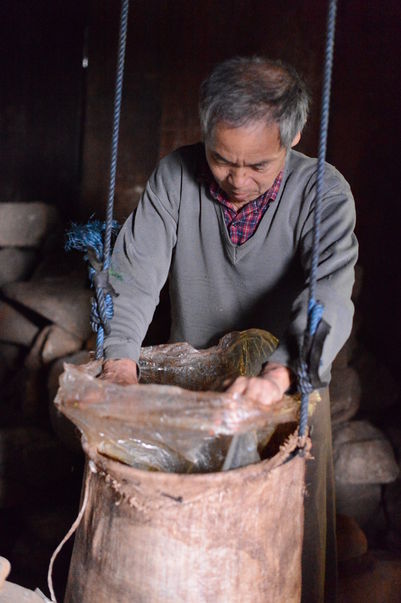
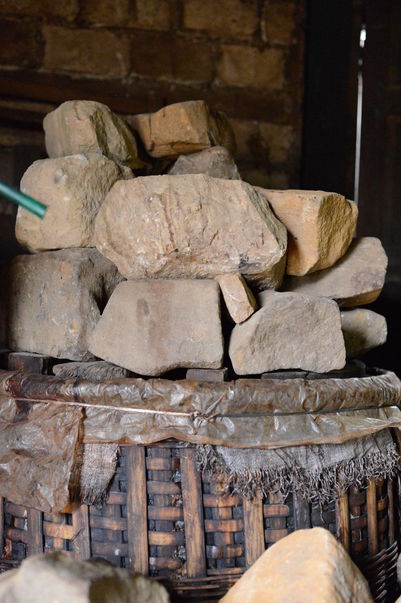
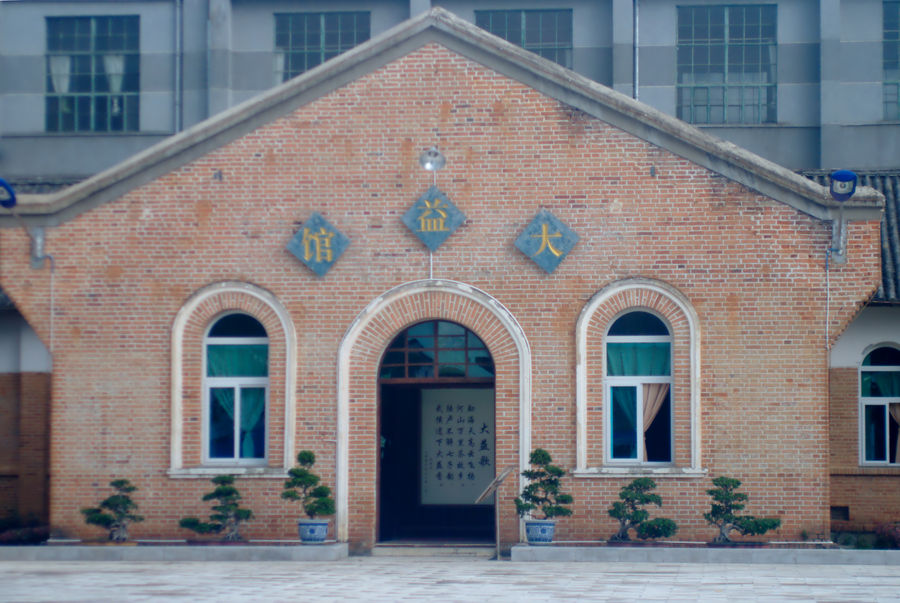
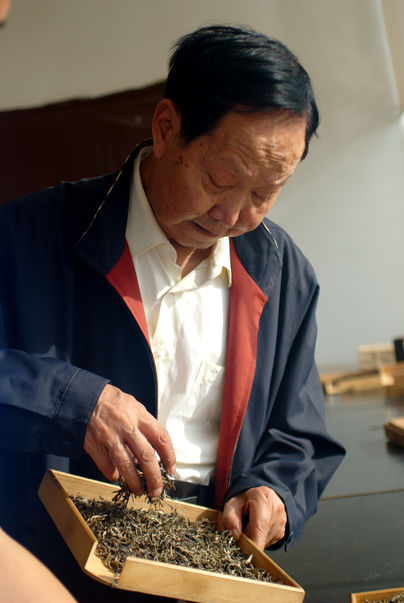
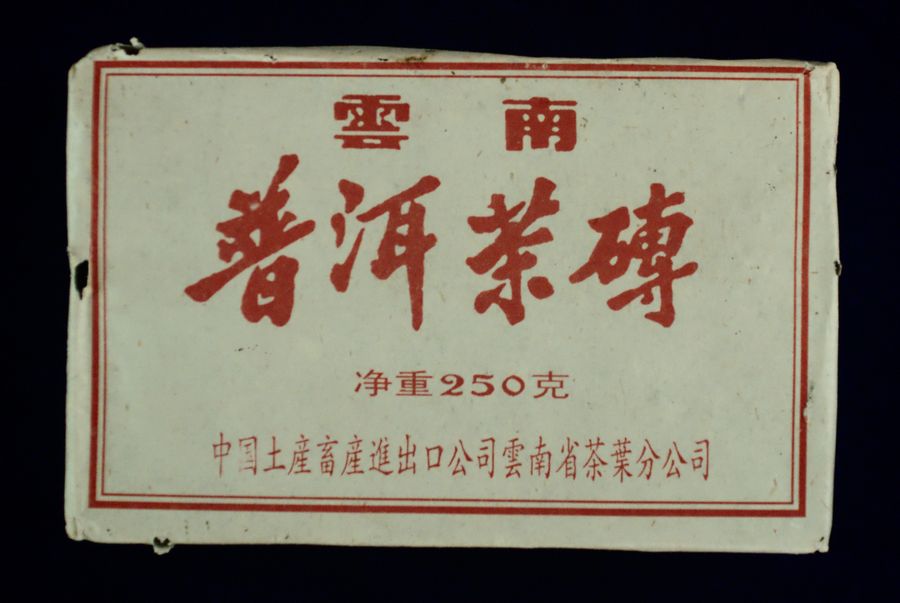
- 1. Form artisanal fermentation in Myanmar 2013
- 2.Form artisanal fermentation in Myanmar 2013
- 3.Menghai Tea Factory 2009
- 4.Zou Bing Liang 2009
- 5.First brick puerh (Pu Er tea) fermented output Menghai Tea Factory 1974
It was only in the 70s , during the era of state factories, the fermentation of the puerh (Pu Er tea) was studied more deeply, that the processes were streamlined and modern and industrial shu cha as we know it today was developed. An expert group of Menghai Tea Factory , including Zou Liang Bing , were formed to study the processes of post fermentation puerh (Pu Er tea) tea set and production methods . Thus, in 1974, was pressed by the Chinese state 's first modern factories fermented brick , which will succeed the following year famous recipes such as 7572 or 7582 reference that will lay the beginnings of fermented puerh (Pu Er tea) such products that today .
To do this raw puerh (Pu Er tea) is stockpiled , then doused with water before being covered by sealed covers. As in a compost, the temperature rises naturally in the heart of the battery and the phenomenon of fermentation operate . When the leaves have reached the desired degree of fermentation , we break the stack, and the tea will be allowed to dry before being sorted and compressed .
But this is the first fermented brick CNNP 1974 that found in books and that will remain in history as the starting point of fermented puerh (Pu Er tea) , some, including Hong Kong and the Guangdong region see the thing a otherwise . Because remember, the small team of Menghai Tea Factory has developed modern methods of fermenting the puerh (Pu Er tea) does not merely study the ancient practice in Yunnan, but also and above all made in the region of Guangdong , where a different culture fermented puerh (Pu Er tea) was developed precisely in order to study the methods in force in this region.
Hong Kong and Guangdong, Hong Kongers storage to the beginnings of the Modern Wo Due ?
For its history , culture and tastes of those who live there , Hong Kong has long consumed the dark puerh (Pu Er tea) tea, c ie fermented. Raw , or green puerh (Pu Er tea) , although consumed as such in Yunnan since the dawn of time, is generally regarded Hong Kong as undrinkable , at best we qualify excessively bitter at worst we will declare dangerous to health.
Has thus been developed in Hong Kong methods to accelerate the natural maturation of puerh (Pu Er tea) tea, and get faster dark puerh (Pu Er tea) , ready to be consumed. For this tea is stored in hot and humid parts, to promote the phenomenon of fermentation the leaf surface:the traditional Hong Kongers wet storage or storage was born.
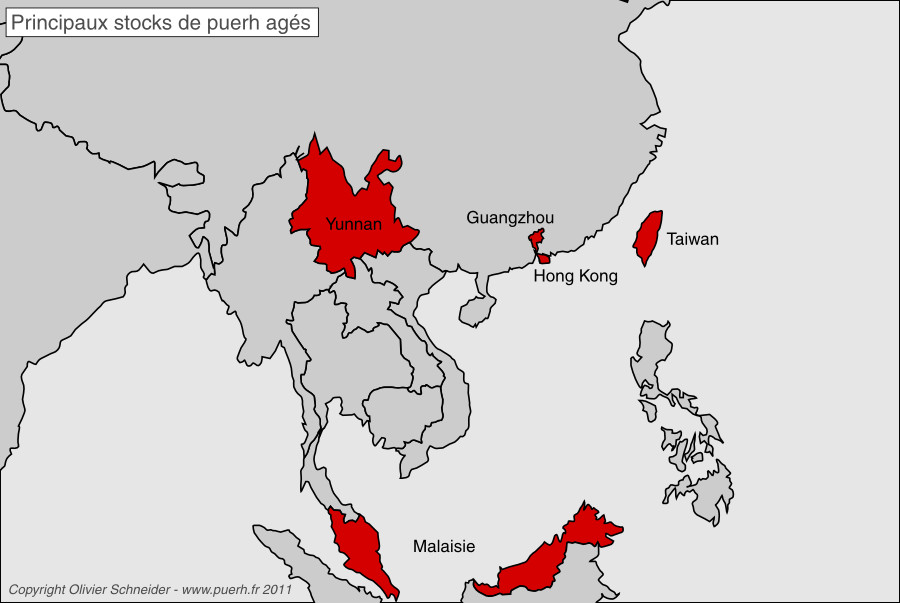
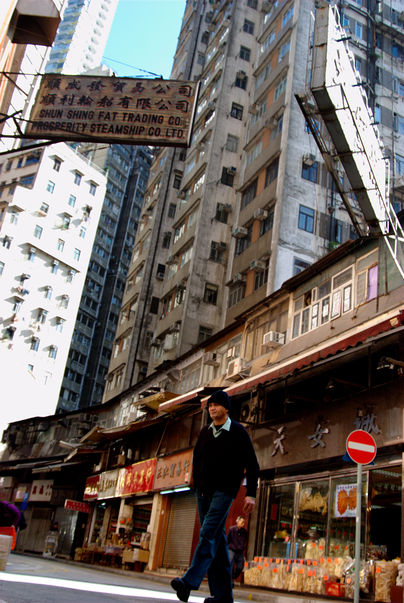
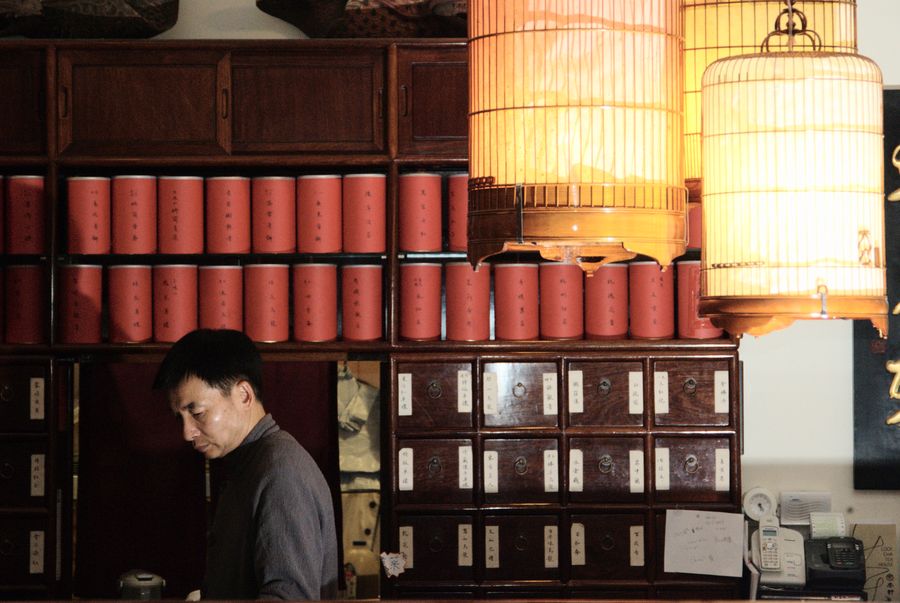
- 1.Hong Kong and Guangdong compared to Yunnan
- 2.Hong Kong to the origins of fermented puerh (Pu Er tea) tea
- 3. Puerh fermented dansun tearoom Hong Kongers
- 4.Tea House in Hong Kong
But this type of fermentation takes place and time, at least 5 years for a product every day , much more for a fine product. But time and space are precisely what Hong Kong is lacking, especially after 50 years where the population believes that the city becomes vertical , and where the demand for dark puerh (Pu Er tea) is growing . Quickly methods of enhanced fermentation as they were practiced in Hong Kong were included in the Chinese region of Guangdong , which faces the island of Hong Kong.
Thus Guangdong rapidly becoming a major hub of puerh (Pu Er tea) dark:there buying green puerh (Pu Er tea) in Yunnan, to sell in Hong Kong once fermented. If in the early days they were content to this traditional methods Hong Kongaises , these latter were gradually adapted to allow a faster fermentation and larger volumes. Thus we began including a water spray tea leaves to places just to play on the ambient humidity, with early results in more or less conclusive. Gradually and empirically techniques were improved and modern fermentation processes controlled puerh (Pu Er tea) finally close to what is practiced today in Yunnan were set developed in stocks Guangdong.
The details of these first empirical practices Wo Due Cantonese are still little known , and often remain in the memories of the houses Cantonese . Always it is as strikingly similar fermented puerh (Pu Er tea) contemporary methods were tested during this period, up to motivate experts Menghai Tea Factory to come investigate these practices, then theorize and develop in Yunnan, an industrial process .
But ultimately where and how was this mysterious brick fermented puerh (Pu Er tea) tea?
This is a question that is difficult to answer as the 70 is a hinge and particularly confused period in terms of fermented puerh (Pu Er tea) . It is thus possible that this was one of the first brick industrial fermented brick produced by one of the state between 1974 and 1979 factories and marketed by CNNP to be sold in Hong Kong.
The size of the brick, and the mold marks on the underside however are quite atypical for a brick CNNP these years, and may suggest a different origin. It is especially quite possible that this tea n have not been fermented in the state of Yunnan plants, but the traditional way to Guangdong , and is the result of all processes first modern post- fermentation , possibly even before 1973.
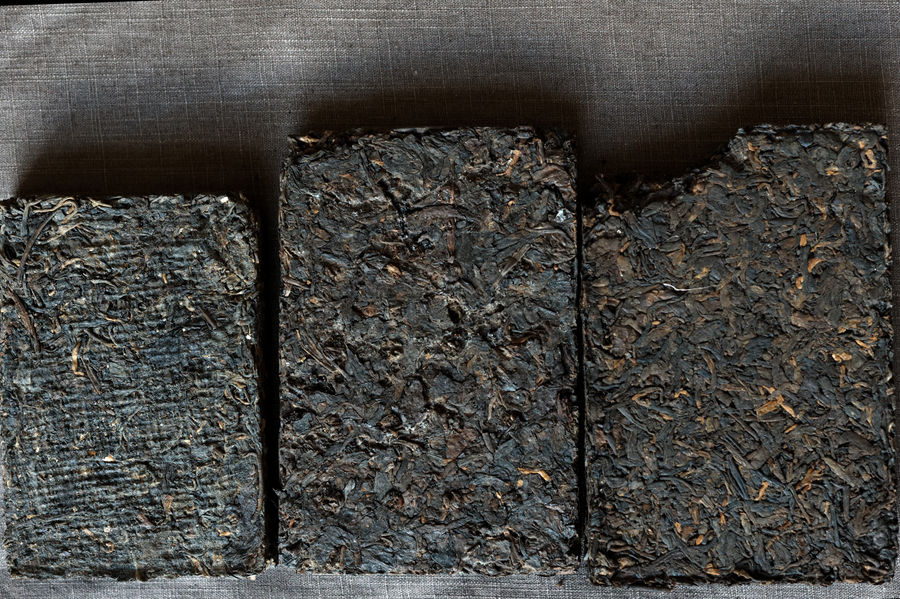
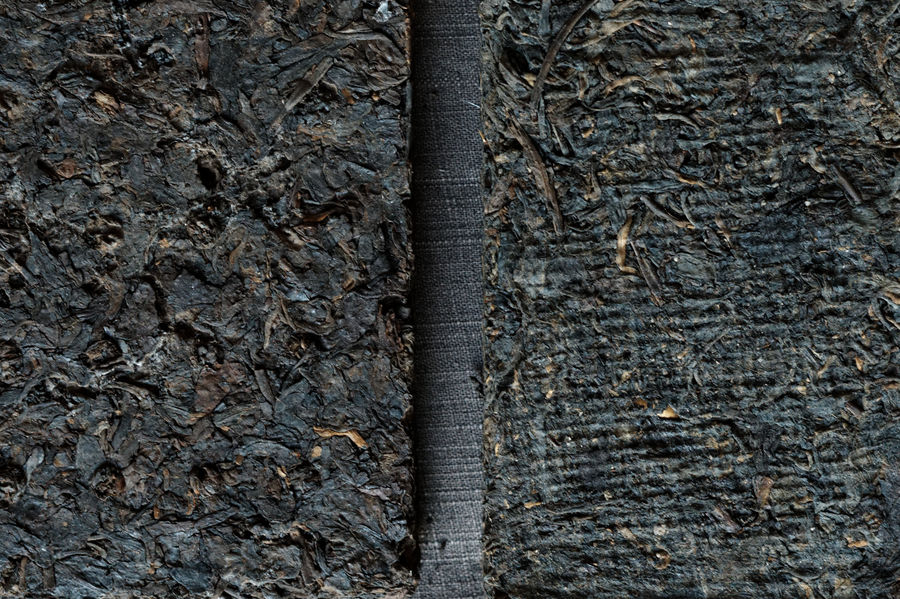
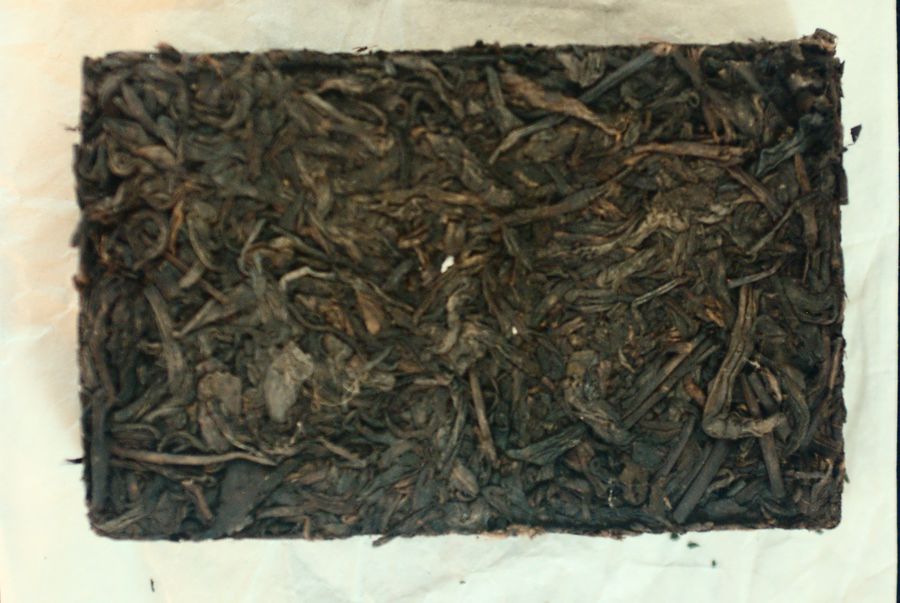
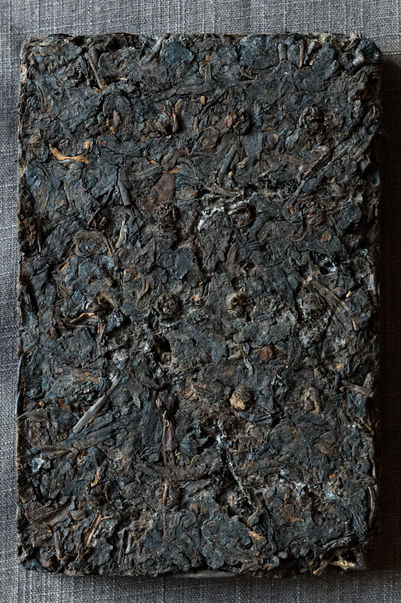
- 1.Brick CNNP 80s, 70s fermented Brick , Brick fermented CNNP 90s
- 2.A Brick fermented Left 70 , Right Brick raw puerh (Pu Er tea) 80 after a natural storage sec
- 3.First brick fermented produced in 1974
- 4.Brick fermented unknown origin 70
But this tea may as well come from farther away , and come from border countries such as Thailand and Viet Nam , which produisaientaussi in time and craftsmen fermented puerh (Pu Er tea) . Those latter particularly popular in Hong Kong , among other permitted to circumvent the restrictions on the sale and export between mainland China and Hong Kong. And if it is quite possible that this tea comes from Guangdong or a neighboring country such as Viet Nam , he may very well have been fermented in the traditional way in the region , to be sold in bulk compress and only subsequently in the 80s for example, see in the 90s .
Once more , and this is also what makes the charm of old puerh (Pu Er tea) , it is difficult to accurately trace the origin of this tea. The only thing we say these sheets when we dégustons is that not only s is indeed a puerh (Pu Er tea) from a controlled , not just a very old puerh (Pu Er tea) fermentation , but also that it is well in typical characters of the first modern fermentations such as is done in the 70s, as these have performed summers in Yunnan , Hong Kong , Guangdong and elsewhere.
First fermented puerh (Pu Er tea) , a different approach to fermentation
Those who know that fermented puerh (Pu Er tea) by what is happening today will forget what they know about this family puerh (Pu Er tea) order to approach the idea of fermented puerh (Pu Er tea) of yesteryear. Tastes in practice many things have changed in 40 years , China and the world, and it is fermented puerh (Pu Er tea) today for the same reason, nor in the same way , we did in the password . So far shu contemporary , very dark and saturated by the fermentation heat , we were in much RESERVW 70 , with teas considerably finer , subtler , who did not seek to transform the character of tea but more to play on subtle balance between the character and the passing of time .
fermentations that looked to the past
Fermentations 70s are thin and light . It does not matter as it does today produce " fermented puerh (Pu Er tea) " as a family of tea in itself, but to play with time , observing the natural fermentation process puerh (Pu Er tea) tea. In this sense these teas are teas that look to maturation, the past and tradition.
First places that we try to emphasize to simulate or increase , so is the effect of time . Reference fine fermentations 70s are ancient teas, that is to say teas already fully mature in those years, or to say otherwise teas produced before the 50s. These are the first places these older teas, from antiquity puerh (Pu Er tea) tea , which inspired the first modern fermentations. But time produces a deep and fine maturation , which penetrates very slowly tea while maintaining its strong character , and this image fermentation that is sought to be introduced was particularly subtle and balanced .
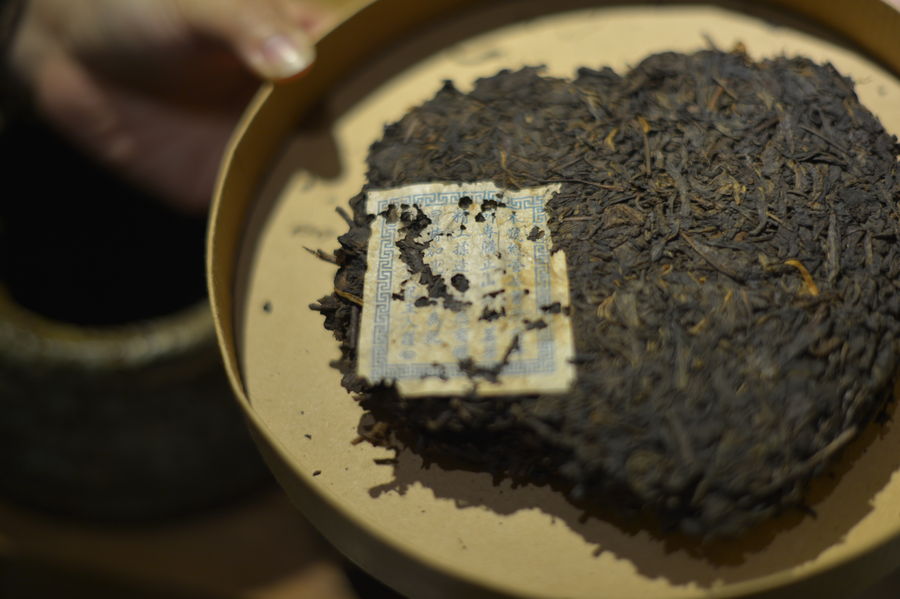
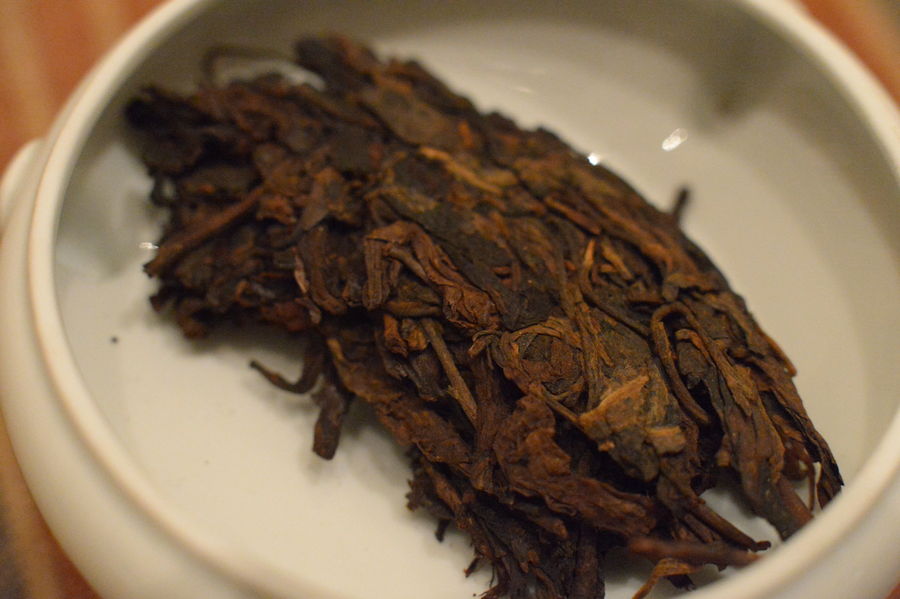
- 1.Tong Chang Hao 1940
- 2.Fragment of Song Ping Hao 1910
- 3.Fragment of Red Brand 1950
- 4.Puerh fermented 70s
This is primarily the domain of forest teas universe of endless wealth , which combines a variety of gasoline and size of wood. Area which also gives meaning to the typology dear lovers of antique tea and its main axes are the date, camphor, chrysanthemum, orchid, but especially the aroma time this particular energy, qi as the Chinese names , and something indefinable that characterize teas approaching or have crossed half a century.
But looking at the past , it is also remembering past practices . In prime locations practices fermentation old craft as they were practiced in the Yunnan border areas. These practices as factories have state precisely scanned in the 50s before trying to resurrect 20 years later. Practices that probably dates back to the turn of the century , and far from being confined within the walls of Yunnan echoes with what was also doing well in Guangxi , Burma, but also in Sichuan and Vietnam . A knowledge that exceeds partially disappeared btw beyond the framework of puerh (Pu Er tea) teas for a touch that much more mysterious old and aged teas and tea since ancient invites us to look to tomorrow ...
The fermentation which looked to the future
If these first fermented puerh (Pu Er tea) were inspired and paid homage to the methods of the past, it is also and perhaps above all to the future that these teas watching. For controlled fermentation does not only aim to evade a long time simulating natural maturation , it also allowed , and perhaps above all, to condition the future maturation of tea.
For this fermentation produced was slight , partial , to start somehow work while leaving room has natural maturation to come . In contrast we now pushes the fermentation , immediately producing fully fermented teas designed for immediate consumption . Leave much less room for time and natural fermentation, these contemporary cha shu naturally have fewer predispositions to maturation.
Teas weakly and finely fermented products in the 70s had on the contrary a great potential for maturation , and let him do the time , still continue to refine and enrich themselves. Deng Shi Hai, specialist Taiwanese teas aged considers such a request mature raw puerh (Pu Er tea) 50 years to produce an aroma of old, where a fermented puerh (Pu Er tea) 20 years are enough. In this sense if the artificial fermentation allowed to earn good time (compared to a slow natural maturation ) n it was not intended to be a substitute in time , were not something finished and looked to the future .
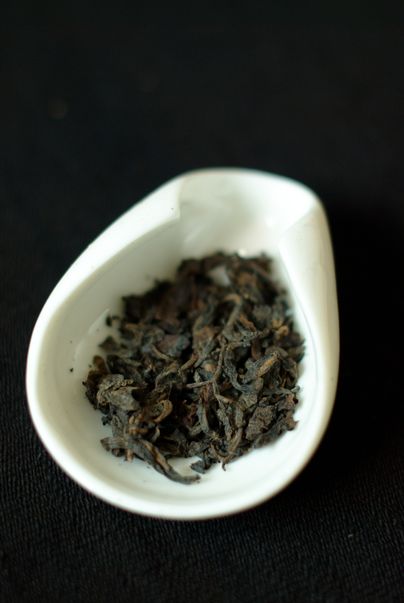
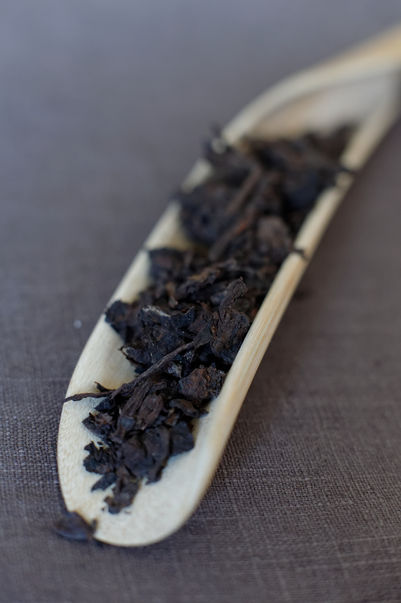
- 1.Gross Puerh 30 years of age stored naturally
- 2. Puerh fermented 70
- 5.Puerh fermented in 70
So it is not surprising that such teas , although fermented in the 70s , found themselves on the market in the 90s, once they mature enough to approach the ancient teas that inspired them. As is the case of raw puerh (Pu Er tea) , experience tea and conditions of maturation then become important . And it is this experience of tea, places and manner in which he ages, which read today in the cup and that determines how the tea is expressed .
If finally the origin of this brick is not precisely known , or at least the first 20 years of his life , we feel by its history against emerging on the palate. Firstly, the influence of traditional storage Hong Kongers which it is derived , which while extending the initial fermentation tea forged has enriched the early years of maturation and helped give tea give depth and fluffy. Found after the beautiful refinement that gave its balance and finesse:20 years in a natural storage during which the Taiwanese tea rested , refocused , clarified , has lost his memory and any traces moisture of her youth to acquire the grace that illuminates today 's tasting.
 |